
General News » News
Teacher recognized for “Advancing Democracy” for the leaders of tomorrow
October 8, 2026 · 0 Comments
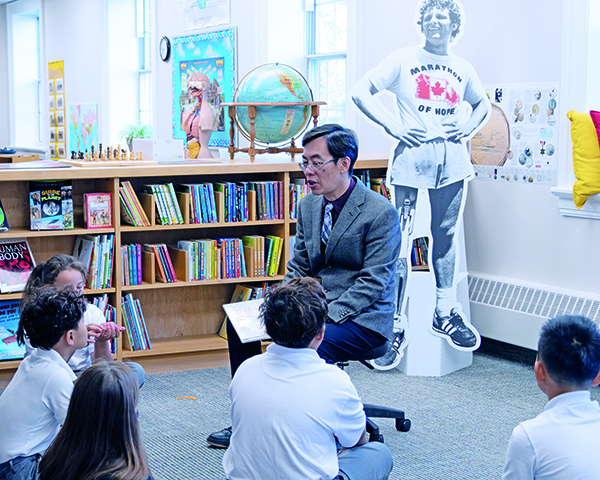
As municipal candidates go door to door to engage today’s voters in the importance of casting their ballot, an area teacher has been recognized for his work in engaging the voters of tomorrow.
Alex Au Yong, an educator at Newmarket-based independent school Pickering College, is one of two inaugural recipients of the Elizabeth Dowdeswell Award for Advancing Democracy Through Education, a program established by the Province in honour of Dowdeswell, who served as Lieutenant Governor of Ontario from 2014 to 2023.
The award recognizes Ontario educators who demonstrate innovative approaches to teaching and make significant contributions to democratic principles and civic engagement. Each recipient receives an award to support continuing education and/or further educational contributions.
“For more than 30 years, Au Yong has used experiential learning to help students understand that democracy is not simply a system they learn about, but something they can actively participate in,” said Pickering College in a statement.
During his 15 years at Pickering College, where he currently teaches Grade 5, he has created opportunities for students to engage directly with elected officials, community leaders, democratic institutions and issues affecting their communities.
“Alex understands something fundamentally important about young people: students develop a commitment to democracy when they feel their voices genuinely matter,” said Dr. Cinde Lock, Head of School at Pickering College. “He moves civic education beyond theory and into lived experience. His students leave his classroom believing they can contribute meaningfully to the world around them.”
This is especially relevant in an election year, particularly at the municipal level where Au Yong has invited local politicians – as well as area MPs and MPPs – into the classroom to engage with students face to face.
“If you just look at the curriculum itself and you are trying to explain something that is pretty abstract to a 10-year-old or 11-year-old, it can’t be fun, it can’t be too interesting, and even in the Senior School curriculum for civics, where it is taught importantly, it’s still an abstraction,” he tells The Auroran. “I think it’s important that they see that they’re real people in these positions, and they’re not that far removed from caring about what we care about in our lives. For young students, it’s another opportunity for them to find something that they care about and want to pursue. It doesn’t mean that they have to be political or get into politics, but there are so many spheres of engagement for them that this is an excellent example of leadership through action of people who I think selflessly want to get involved.
“We’re very critical of our politicians and the kids and their families will hear a lot about the news from here and elsewhere, but to know that there are people who put themselves forward and want to do good things for the community is a really good example of how they might see themselves as future leaders, too.”
Looking back at receiving the award at the Art Gallery of Ontario last month, Au Yong says he was “quite honoured” and “grateful” for the opportunities he has had over the years “to be able to extend learning beyond the curriculum in social studies.” He also expressed gratitude for the opportunity to teach in an environment like Pickering College which encourages teachers to foster opportunities like these in-class encounters with leaders.
“I take great delight in seeing students engage purposefully with elected leaders and officials at all levels of government to deepen their learning and contribute meaningfully to our communities and beyond the classroom,” he says.
As the October 26 Municipal Election approaches, this has been a focus within the classroom as well.
As Federal and Provincial politics often capture the most headlines, when asked how politicians, parents and educators alike can spark student interest in the local level, Au Yong says this type of engagement shouldn’t wait until people reach voting age.
“I think beyond the schools it’s a civic duty – it’s a precious responsibility to be in a democracy like Canada. It shouldn’t wait until voting age [for them] to know about it, and learning about it is important at this time…beyond saying it is your responsibility and right, I think it is something that might help some students find that additional spark or engagement and carry that conversation home,” he says.
“My dinner table question for them this week was ask your parents the question: ‘Do you think we pay our fair share of taxes?’ because we’re on the topic of taxation and what kind of taxation that we each are responsible for, and just closely watch their facial reaction beyond what they say. It’s kind of funny to hear what the 10-year-olds and 11-year-olds come back and say, ‘Oh, my mom got angry when I asked that question,’ or, ‘My mom went red in the face, or, ‘My dad said, don’t talk to me about taxes.’ Well, let’s talk about why they said that. I explained to the parents in a communication, they’re going to come home and ask you that, and it can be quite interesting what the students bring back. I think it’s part of being civically engaged for anyone, no matter their age.”
By Brock Weir
Editor
Local Journalism Initiative Reporter


Readers Comments (0)
Headline News

Future in focus as Mayoral candidates share ideas at Library event
.
National Day for Truth & Reconciliation gathering urges standing in solidarity in the face of denialism
True restitution would be the ability to bring back “every single child that was murdered, starved, raped and killed” in Residential Schools, says Traditional Anishinaabe ...
Start Thanksgiving in style with outdoor music and “Fall Faves”
The Thanksgiving Long Weekend is here, and there are plenty of ways to get a head-start on seasonal fun in Aurora. The party is set ...

Aurora Sports Hall of Fame’s Class of 2026: AMHA President Joe Bentolila
After enjoying an Alaskan cruise and copious amounts of King Crab last week, Joe Bentolila is the picture of relaxation at our booth at Wicked ...


