
Headline News » News » News and Sports » Sports
Former NHLer and founder of ‘50 Mission Cast’ Shayne Stevenson skates and fishes his way into the Aurora Sports Hall of Fame
October 29, 2026 · 0 Comments
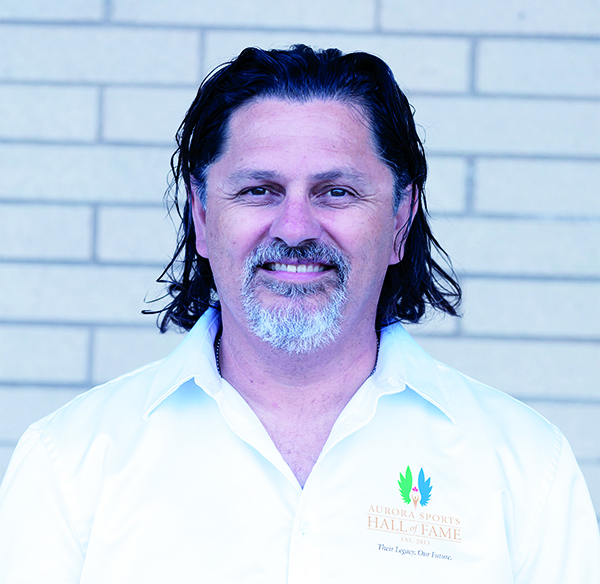
Aurora’s Shayne Stevenson has found a recipe for enjoying life after an eleven-year professional hockey career, including three seasons with the Boston Bruins and Tampa Bay Lightning.
He noted that it’s “Darts, golf, and euchre after we’re finished fishing. It’s all about bragging rights in the Stevenson family between my son Cam, my brother, Dale, and I. After hockey, I wanted to have a sport and my father-in-law taught me about darts. Jack was a machine and made me better. He was the best around and encouraged me to throw 700 darts a day while my kids were watching videos. Eventually, I won the Darts Ontario championship in 2004 and 2006 for Zone 15 which stretches from Sutton to Highway 7. We only play nine holes of golf after a charter, but we have a lot of fun. It’s all about having fun, but we get ‘worked’ if we’re not pulling our weight at the dart board, the golf course, the card table, or on the boat.”
Stevenson feels connected to Central Ontario lakes and rivers most of all and acknowledged, “I’ve always had a boat in the water.” It was this lifelong love of boats and fishing that ignited Stevenson’s entrepreneurial spirit when his professional hockey career began to wane in the early-1990s.
His charter company 50 Mission Cast is a perfect combination of hockey, fishing, storytelling, and the outdoors for the Aurora-raised 56-year-old.
Stevenson and his crew offer a slice of Canadiana to charter customers on idyllic fishing adventures: “We based the name on The Hip’s song about Bill Barilko. We heard ‘50 Mission Cap’ playing on the radio while we were fishing on the French River over 20 years ago. It’s where 50 inches and 50 pounds is the mission. Those are the magic numbers for muskies.”
The founder of 50 Mission Cast has been offering muskie and walleye charters on the Upper French River for decades, but the trips took on deeper significance for the former NHLer: “Fishing provided an escape for me after the hockey season and it was a way to have fun. Near the end of my playing career, I would fish right up to December and then I’d call up every pro team across North America looking for a veteran player to play for the rest of the season. No training camps. No playing my way into shape.”
Stevenson declared himself a free agent after each of his single-season contracts which took him to far-flung hockey outposts across the continent including the Atlanta Knights and Fort Wayne Komets of the IHL, the Muskegon Fury, St. Thomas Wildcats, Utica Blizzard, Saginaw Lumber Kings, and Brantford Smoke of the Colonial Hockey League, the Port Huron Border Cats of the UHL, and the San Angelo Outlaws of the WPHL. His final pro hockey destination was in Europe where he played for the Ayr Scottish Eagles of the British Ice Hockey Superleague.
Junior hockey came easy for Stevenson and he starred for two championship caliber teams in Kitchener in the late 1980s. In the 1989-90 season, the productive centre amassed 28 goals, 62 assists, and 115 PIM in 56 games for the Rangers then put together a great playoff run with 16 goals and 21 assists in 17 games.
“Everything just came together. We were a good team with four good lines. In the playoffs, we dropped down to two lines most of the time so I was more productive, and lucky enough to beat Eric Lindros by one point in the scoring race. However, we lost the OHL championship and the Memorial Cup to Lindros.”
Despite the bitter losses to Lindros and the Oshawa Generals on Junior hockey’s biggest stages, Stevenson’s strong seasons in Kitchener caught the eye of NHL scouts. He was selected by the Boston Bruins 17th overall in the first round of the 1989 NHL draft and commenced his career in the NHL. However, his role with the Bruins was a difficult one for Stevenson to perform.
“Mike Milbury told me you’re on a Stanley Cup team—we had everybody back for the 1990 roster. He told me, ‘Shayne, you’re not going to be our goal scorer,’ and that I’d have to fight my way into the Bruins lineup. I was only 190 [pounds] and having to fight guys like Probert, Donnelly, Mann, Ray—I didn’t want to be a fighter. I was a scorer.”
Stevenson played 14 games with the Bruins in his rookie season, but showed that he could score in the AHL with the Bruins affiliate in Maine where he scored 22 goals and 28 assists in 58 games while racking up 112 PIM.
“When I went down to the minors, everyone left me alone after my fights in the NHL.”
The combination of toughness and scoring touch with the Mariners was recognized by the Tampa Bay Lightning who drafted the unprotected Stevenson for their inaugural season. Stevenson recalled his first discussion with Lightning GM Phil Esposito who was joined by his brother, Tony, as well as Wayne Cashman and Terry Crisp.
“Harry Sinden says you’re a hell of a player. We want you to settle down, get married, and get ready for the season.” I showed up for camp in the best shape of my life, but during a scrimmage, I was tripped and it looked like I was going to take out Manon Rheaume who was the goalie. I would have seriously injured her so I got into a roll to break the slide but hit the net which didn’t move and I hurt my back. I tried playing through back spasms, but I felt like I was done at 22 and I’d had my shot at 18.”
Prior to his run of bad luck in the NHL and his meteoric rise to prominence in the OHL, Stevenson made an auspicious debut in Junior hockey as a 14-year-old with the Aurora Tigers—against the wishes of his father.
“We had won the Ontario major peewee championship—my first and only hockey championship. In my minor bantam year, I was coached by [ASHoF inductee] Lowell McClenny. He made me captain for the first time. During the minor bantam championship, we were losing 12-3, but I scored the three goals. Junior Tigers Head Coach Ted Tobias came up to me after the game and told me ‘I want you to start coming to practice with us.”
Stephenson added: “I was only 14 years old and it was going to be tough playing guys who were six years older than me, but I got a call from Ted’s assistant coach on a Friday night. He told me, ‘The Tigers are sending a cab and you’re playing in the second period. Ted had put my name on the game sheet since the team was short-handed after a big fight the night before. My dad told me from his place of work that ‘You’re not going’ but I said ‘I’m going.’ I got an assist in the third period and I looked up the crowd at the ACC and my dad was there. He’d left work to see me play.
“I started playing for the Junior Tigers and went all the way to the Centennial Cup in 1984 as the youngest player at the tournament. Brian Fogarty was on the team, too, and he was only 15. I was so proud to be wearing a black Aurora Tigers jacket at Aurora High with a #9 on it. The ACC was jammed every night we played. Standing room was six deep. I realized that I’m 14, playing in my hometown, and living the dream. The problem was that every time there was a fight, I’d get beaten up by the older players, but Jody Matthews would come to help rescue me. Now he’s a Criminal Lawyer so he’s still helping to rescue people.”
Stevenson’s fond connection to the Tigers at so many levels of hockey has made his upcoming induction in the Aurora Sports Hall of Fame even more meaningful.
“After having been through so much in my hockey career including sixteen concussions and playing for over ten seasons, I had walked away a bit upset with the game. So, to get this honor—after all that—means the world to me. I want to be remembered as a kid from Aurora playing Junior A hockey for the Tigers who made it to the NHL. It proved that you didn’t have to play in bigger centres like Toronto. You could play right here and Aurora at that time had a population of about 10,000.
“Being inducted into the Aurora Sports Hall of Fame is a fantastic way to finish my hockey career. It’s great to be recognized by my home town—it’s such an honor. It’s been a great year for me and I’m looking forward to a great time on November 5.”
By Jim Stewart
Local Journalism Initiative Reporter


Readers Comments (0)
Headline News

Aurora returns Mrakas for third term as Mayor, elects four Council newcomers
Mayor-elect lauds community for “kicking negativity to the curb”

Chamber recognizes entrepreneurship, growth and community at Business Excellence Awards
Sandra Farran was 60-years-old when she decided to start a new chapter in her own life. In the two years since she opened Saltbox Café ...
New and returning faces on Council looking forward to getting to work
Aurora residents elected a dynamic new Council on Monday night, with four first-time Councillors joining two long-time incumbents – with the majority of representatives at ...

Former NHLer and founder of ‘50 Mission Cast’ Shayne Stevenson skates and fishes his way into the Aurora Sports Hall of Fame
Aurora’s Shayne Stevenson has found a recipe for enjoying life after an eleven-year professional hockey career, including three seasons with the Boston Bruins and Tampa ...