
General News » News
Conservation Authority seeks local input on impacts of climate change, development
July 30, 2026 · 0 Comments
In a time of climate change, severe weather, flooding, and erosion are becoming more common – and the Lake Simcoe Region Conservation Authority would like to know what you’re seeing on the ground.
The Lake Simcoe Region Conservation Authority (LSRCA) is seeking public feedback as they revise and update their Subwatershed Plans – including the plan for the East Holland River Watershed in which Aurora sits.
“Subwatershed plans provide a snapshot of environmental health, identify stressors that are impacting that health, and actions to protect and enhance the subwatershed,” says the LSRCA. “These plans will help inform decision-makers (such as municipalities) on how their decisions will impact the subwatershed and promote responsible land-use planning.”
The public survey, which can be found at yoursay.lsrca.on.ca, will help the LSRCA “better understand what locals are seeing in these watersheds, and what your priorities are for those rivers and creeks.”
While Aurora might seem geographically removed from Lake Simcoe, what happens here can impact what happens downstream as part of the East Holland River System.
“I think it’s very common that a lot of people don’t realize that there is that interconnectedness with the systems that we monitor and look after as well,” says Sinem Connor, Senior Communications Advisor with the LSRCA, noting the Authority is currently at work on an Aurora low-impact development project near the Aurora Recreation Centre that will help mitigate nearby flooding.
“What we’re really finding is that due to climate change and an increased urbanization, we’re finding that these systems are kind of pressured a lot more and we’re seeing increasing trends of like chloride and other contaminants,” she continues. “Through our survey, we really want to know that, are residents noticing these impacts? Are they seeing these in the creeks or in the parks? Is there really a visual impact that they’re seeing through the eyes of climate change and the severe weather that we’re having?
“We’re basically service providers for our municipal partners who want to get some of the work done as well. Although it might not be directly in their backyard, but if it is nearing their communities and their properties, that’s still going to have an impact on them, right? Although watersheds are these natural boundaries, the impacts really go beyond that. From clean air to clean water to the ecosystems that grow, that’s really impacting the whole region as a whole, not just Newmarket, not just in Aurora, and not just Barrie or the Kawarthas. It’s really an interconnected system. I think with hearing from the residents, we really want to know what is their concern in their backyards? What are they really experiencing and how are they seeing these changes impact in their local parks?”
Pamela Strong, Integrated Watershed Management Specialist at the LSRCA, who is leading the survey, notes the last subwatershed plans were completed in 2010, and a lot has transpired since then.
Once the survey closes on September 11, Strong says they hope to have some of the results up for review in early 2027.
“There are a lot of great studies going on, there’s also a lot of development happening, and we want to make sure we’re capturing all of that, the latest practices that can be followed, and we just want to make sure we’re promoting all the latest development practices that can help to minimize the impacts – just trying to make the watershed as healthy as we can.”
Of particular interest within the East Holland River system, she adds, are invasive species, the impacts of climate change, specific areas prone to flooding, particularly viewed through the lens of more frequent and more intense storms, and, of course, water quality overall.
“We’ve had issues with phosphorous in the watershed, but we’re also looking at chloride from road salts – I know that municipalities have been doing a lot to reduce salt application, but just recognizing that it is an issue and trying to encourage people to use less is a big thing that we’re looking at.”
Adds Connor: We just encourage people to explore. We always encourage people to be curious about their environment, ask questions and ask questions to those that are in power and in office and really question, what is happening in my neighborhood? Why is that happening? Why are we flooding here but not here? [These types] of questions really do bring these environmental issues up front, for sure.”
By Brock Weir
Editor
Local Journalism Initiative Reporter


Readers Comments (0)
Headline News
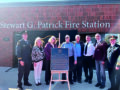
Station rededication salutes a century-long legacy of fire service
A century-long legacy to local fire service was celebrated Thursday afternoon when the Towns of Aurora and Newmarket came together to rededicate the Edward Street ...

Commitment to Truth & Reconciliation underscored at Citizenship Ceremony
As September ends with National Day for Truth & Reconciliation, it began in York Region with a citizenship ceremony that underscored the importance of coming ...
Aurora Votes 2026: Mayoral candidates share views on Council compensation
Salary and compensation for Aurora’s Council representatives was a hot-button issue in the outgoing term of Council, with incumbent members taking different positions on recommendations ...

AMHA’s Early Bird Tournament attracts 81 eager hockey teams from across Ontario
Mayor Tom Mrakas and AMHA President Corby Saltzman presided over Opening Ceremonies of the 81-team, 13-division Aurora Early Bird Tournament at the ACC on Saturday ...


