
General News » News
Northridge gala nourishes body, mind and soul – in the name of mental health
September 24, 2026 · 0 Comments
Renay Partridge started to struggle with her mental health at the age of 17.
Pregnant with her son William, life came at the Grade 12 student fast. She was determined to graduate at the end of the year, all the while adjusting to significant changes in her life.
While she graduated with good marks and she and William’s father settled into their new rhythm of life, she found it hard to regulate her emotions – and turned to alcohol at the age of 20.
Partridge shared her story of addiction, recovery and sobriety, and parlaying her experiences into a successful local business with area residents on Thursday night as the Salvation Army’s Northridge Community Church held its annual East Coast “shindig”, Harbour of Hope, to support its mental health programs.
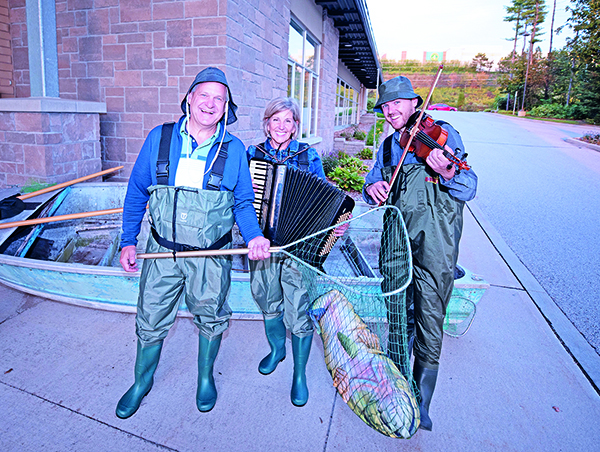
The founder of On the Wagon Mocktails, Partridge was a keynote speaker at the event, which was an all hands on deck affair, with some elements of the catering being done by Salvation Army clients, Newfoundland cod freshly caught by Northridge pastor Captain Fred Reid and his family, and a signature mocktail – “Sally’s Passion,” a nod to the Salvation Army’s nickname of “Sally Ann” – concocted by Partridge.
“I never really had the chance to learn how to be an adult in stages; I was thrown into it,” she shared with the audience. “I had severe postpartum depression and anxiety, and that was really the beginning of what became a very long battle with my mental health. For years I was trying to get better. I went in to the hospital more times than I can remember. I saw psychiatrists, I was put on medication, I was given different diagnoses. I spent months, if not years, on a waiting list for copies of behavioural therapy and dialectal behavioural therapy, and the hospital won’t admit you unless you are a harm to yourself or others. So, eventually I told them I was going to hurt myself so I could get some help.
“I tried everything. But even with all of that, there was still something I was missing. I didn’t have the tools to cope with life or what was happening inside my head. I couldn’t regulate my emotions. I couldn’t handle anything difficult. Sometimes I couldn’t get out of bed. Other times, I couldn’t sleep at all. I constantly felt like something terrible was about to happen. I stopped working in 2007, and I didn’t work again until 2020. Then, when I was 20, alcohol came into my life.”
At first, Partridge said she felt like there was nothing else she was able to do.
Alcohol “clouded and quieted my mind” and she found a way to relax, socialize, and have fun. But, she found, alcohol didn’t make her depression go away; rather, it made her not care she was depressed.
“For somebody who had spent years desperately trying to get away from constantly suffering, I finally felt relief until it stopped working,” she said. “Eventually, I became physically, mentally, and emotionally dependent on alcohol and alcohol didn’t just destroy my life, it destroyed me mentally, socially, and it oftentimes turned me into a very angry person. By the end, I was morally, emotionally, and physically bankrupt.”
But there was light at the end of the story.
She and her fiancé Ian have been together for 14 years. He was at her side as she rebuilt her life, found her sobriety, and learned how to live again.
“Once I was sober, I also started to realize just how big of a role alcohol had been playing on my mental health. Alcohol had given me temporary relief from my anxiety and depression, but once I wasn’t drinking anymore, I could finally see how much worse it had actually been making everything. I was also taking medication for my mental health while I was drinking, and alcohol was working against the very treatment that was supposed to be helping me. There’s a reason so many mental health medications tell you to avoid alcohol. Once I stopped drinking, my medication started working, but medication isn’t going to fix everything either, so I had a lot of learning to do. I had to learn how to recognize what I was feeling instead of immediately reacting to it. I had to learn what I could control and what I couldn’t, and I had to learn how to ask for help. But I also had to figure out who I was.
“For so many years, my identity had been wrapped up in mental health and then substance use. Once those things weren’t controlling every part of my life anymore, I had to learn who I was, and I had to decide who I wanted to be. That took time. Today, I’m very self-aware. If I notice myself getting irritated or overwhelmed, I can usually stop for a second and ask myself what’s actually going on. Am I exhausted? Am I hungry? Am I in pain? Is there something bothering me that I need to talk about? Do I need time alone? Do I need to get out of the house? I have two rules now. And things might sound really simple to somebody else, but when you spend years feeling completely controlled by your emotions, learning that you can actually understand when you respond to them differently is huge…. I obviously can’t know what my life would have looked like if I had accessed more of these kinds of supports when I was younger, but I do wonder. If somebody had helped me learn these tools earlier, would I have spent so many years suffering? Would things have gone as far as they did? Maybe they wouldn’t have. But at the same time, I also know that I wouldn’t be the person standing here today if I hadn’t [gone] through everything I did.
“I wouldn’t wish those years on anybody, but I also wouldn’t erase them because they shaped me into the person I am today. Mental health wasn’t talked about when I was growing up the way it is now, so seeing more support available, and especially seeing more attention being put on young people is incredibly important because maybe our kids don’t have to struggle the way I did. Maybe they can get support and learn some of these things before they spend years believing that feeling completely overwhelmed by life is just what life is, and you’re weak because you can’t figure it out.”
As she attained her sobriety she said she rediscovered her zest for life. She started going to concerts and events, having what she described as “real, genuine fun” and she happened upon the idea providing liquid alternatives for those out on the town.
She began with vendor markets, eventually applying for grants pertaining to start-up companies, winning a grant she describes as “very competitive.”
“Sometimes I really do have to stop and think about how different my life looks today,” she says. “I didn’t work for 13 years and now I’ve built my own business. On the Wagon Mocktails is about much more than being a mocktail – it’s about creating an experience where people can celebrate, connect, feel included and have fun without alcohol. People don’t drink for all kinds of reasons. Maybe they’re sober, maybe they’re pregnant, maybe they’re taking medication, maybe they’re driving, maybe they simply don’t want to drink and whatever their reason is, it’s nobody else’s business. You shouldn’t have to explain yourself. You shouldn’t have to feel like an afterthought when you’re not drinking.
“My life looks completely different today than it did back then, but I don’t want that to sound like everything is perfect now because it isn’t. I still experience depression. Anxiety is still very present in my life. I still get overwhelmed. I still have bad days. The difference is that today, I know I can get through it. I know I recognize when something is wrong. I know when to engage the tools I’ve learned, when I need to talk to somebody, when I need help, and when I just need to give myself a little bit of time. And sometimes I’m not okay, and that’s okay. Maybe a 17-year-old girl who feels completely overwhelmed in her life can get help before she loses herself. Maybe a mother doesn’t have to prepare herself for the possibility that her child isn’t going to survive. Maybe somebody can learn that asking for help is okay, that feelings pass, and that there are tools they can use, and that life that they have right now does not have to be the life they have forever, because if I could somehow go back and show a 17-year-old me, the woman standing here today, I wouldn’t have believed it. I wouldn’t have believed that I would go back to work. I wouldn’t have believed that I would build a business, and I definitely wouldn’t have believed that one day I would stand in front of a room full of people….and I have a life today that I generally could not have imagined back then.”
By Brock Weir
Editor
Local Journalism Initiative Reporter


Readers Comments (0)
Headline News

Break the Silence walk to mark 10th anniversary with expanded outreach
.
Victoria Hall restaurant will carry on legacy of Aqua Grill
Aurora’s Victoria Hall will soon begin a new chapter as a restaurant, peppered with the flavours many local foodies have come to know and love ...

One-hundred-year history of St. Andrew’s College in Aurora celebrated in heritage showcase
St. Andrew’s College has been dedicated to boys’ education for more than 125 years. Now, as the school marks 100 years since it moved from ...

Biondic’s inspirational life as a marathoner, ultramarathoner, and community builder stamps his ticket into the Aurora Sports Hall of Fame
After 25 years as an ultramarathoner and 20 years of experience as a marathoner, George Biondic knows a thing or two about ultrarunning. The dynamic ...