
Arts and Culture » General News » News
Gifting ceremony was “healing” experience for Indigenous Artist
December 23, 2025 · 0 Comments
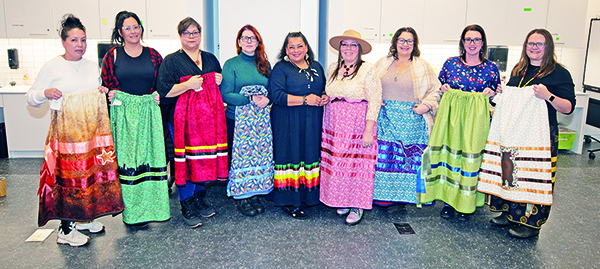
A healing journey came full circle at the Aurora Cultural Centre recently as Indigenous artist Sharon Rigby brought the curtain down on her first solo show, “Stories Woven Through Fabric.”
The exhibition, which took pride of place throughout Aurora Town Square this fall, was centred on the medium of ribbon skirts, garments which hold “deep cultural significance” for many Indigenous communities across North America.
Rigby, a Mohawk/Ojibwe artist from the Akwesasne Reserve in Quebec, who now calls Peel Region home, says ribbon skirts are symbols of identity, connection to heritage and the land, as well as serving as tools for healing.
The show was envisioned by Rigby as a way to “foster a sense of healing and understanding” around the time of National Day for Truth and Reconciliation, and choosing ribbon skirts as her artform not only allowed her to tell the stories of those who survived residential schools and the Sixties Scoop, but pick up threads of her own story, which has been impacted by both.
“As an Indigenous individual who is also affected by residential schools in my family line, the Sixties Scoop, and being disconnected from community, a common thread through all of the individuals [represented in each ribbon skirt] and myself particularly is lack of sense of belonging and for healing. I guess the way I wanted to look at this is offering this huge hug, this embrace, for everyone to be able to come together and recognize the common thread, and to feel that love and acceptance.
“Healing comes through the expression, through the creativity in art, it comes through the individuals willing to talk, allowing it to be public, and closure comes when they receive their skirts in ceremony and among likewise individuals who are sharing that journey with them.”
Indeed, the Gifting Ceremony was the culmination of Stories Woven Through Fabric and paying tribute to the individuals whose stories were represented through every ribbon and stitch.
“Many years ago, Indigenous people weren’t willing to talk and, as it was, no one else was ready to listen, but we’re coming up to a very interesting time now because Indigenous people are stepping forward, talking, and we have people’s ears,” says Rigby. “It wasn’t unusual. There are many people in the community who still aren’t ready to talk, there’s a lot of trauma and grief, but the whole idea behind the exhibition was to have some closure on that. In my spiritual belief, it’s like the creator picked [the individual represented in the skirts]. I needed twelve, Creator gave me twelve.
“When I was reading their submissions, which was no easy feat as it was difficult reading sometimes, all the markers for the individuals are also markers in my own family line. When I would read their story, I would jot down key elements in what they’re talking about. If there was a specific number they were talking about, if some individuals talked about harvesting on their land with their grandmother and what it was like to pick herbs, I would find a fabric that would represent that. All of the words, all of the stories that were shared, every one I read, it was writing down key details and forming this idea of what their skirt would look like.”
Having them receive them at the end was just the icing on the cake – a necessary step, to be sure, but the icing on the cake.
“It was so beautiful,” she shares. “Sometimes when you hear about people having like an out-of-body experience, although I was present at the Gift of Resilience ceremony, my spirit was soaring. All of the individuals who came there was a lot of emotion and you could just feel the energy in the room. There was laughter, there were tears and I think, for myself, there was just that little bit of closure for myself as well knowing that though my creations and through my artistry that I was able to listen and create something of such significance and important to each individual.
“I really felt like I was a bridge. I was just the bridge-maker for these individuals and it was my honour to serve as that for them.”
By Brock Weir
Editor
Local Journalism Initiative Reporter


Readers Comments (0)
Headline News
Sustainability, demand sees significant shift for Welcoming Arms
.
Easter Bunny hopping excited for Saturday’s Easterpalooza
Petch House is ready to welcome the Easter Bunny this weekend as the Town of Aurora puts the finishing touches on its Easterpalooza celebration. Set ...
Get “Active” at Chamber’s annual Home Show
The Stronach Aurora Recreation Centre is a great place to stay active – especially when it provides the backdrop to the Aurora Chamber of Commerce’s ...
Junior Panthers bash Burlington Barracudas 5-1 to close pool play at OWHL U22 Elite Eight Championships
Ellie Lewington, Anastasia Trifon, Zoe Ordanis, Audrey Martone, and Lily Paisley scored one goal each to pace Central York to a 5-1 win over Burlington ...


