
General News » News
Downtown Aurora’s Community Planning Permit system could be in place by February
January 22, 2026 · 0 Comments
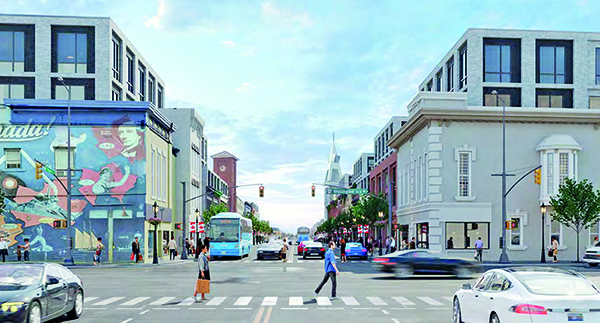
A bold new vision for Aurora’s historic downtown core could be on the books by the end of this month as Council looks at ways to intensify the area while still maintaining its heritage.
Council, sitting at the Committee level last week, gave the tentative green light to approving an Official Plan Amendment allowing the Community Planning Permit System (CPPS) to take root.
The CPPS is intended to streamline the Town’s zoning, site plan, and minor variance application systems into one streamlined approvals process. It would also give the municipality a greater say over development projects in the downtown, setting clear expectations on what the Town is looking for, how they dovetail with the existing community, and how it incorporates the heritage facades of existing buildings.
The CPPS proposal was last before Council in the fall. While some resents said they were concerned over the traffic and parking impacts that might result from more people living in the core, along with the impact construction might have on Victorian homes in the area, the majority of feedback was positive, stating intensification while respecting heritage was the right path forward.
The draft plan was presented to Council last week by consultants Tim Smith and Mohammed Mubarak of Urban Strategies Inc., and feedback from lawmakers was similarly positive overall.
“I don’t have to tell you how precious your downtown is, how historic it is, and how that historic character has been maintained generally for the last century or more, but like all downtowns it has evolved and needs to continue to evolve to remain vibrant and remain the civic heart of your community,” said Smith. “You’ve made some significant investments in the Town Square and in the Museum, and property owners have also made investments in small-scale developments… The Amica development is a very significant change and, in fact, gives us a clue about some of the future changes that can be expected through intensification proposals.
“There’s lots of opportunity in your downtown for more intensification – I think that’s widely recognized in previous studies and, in fact, it’s a key objective of the CPPS and Bylaw to, in fact, encourage development. Our task was really to look to see how we can actually encourage development, maybe with some slightly more flexible built form controls around height, setbacks, and step-backs, while ensuring that we’re respecting, maintaining that really valued historic character of downtown, at the same time being sensitive to the neighbourhoods that are just around downtown.”
Among the key elements of the CPPS is allowing for 10-metre step-backs above the third and fifth storeys to preserve the heritage facades of the existing buildings and the character of the core, while permitting buildings of up to nine storeys on the west side of Yonge Street, architectural guidelines, and a greater focus on the pedestrian.
“We know how important parking is downtown and needs to be maintained, but it certainly can be reconfigured as part of a future development,” Smith continued. “This framework identifies those future sites, in fact, where in some cases lands are being assembled in anticipation of development applications. It also identifies future potential connections, both for pedestrians, service vehicles [and] laneways.
“What’s the experience for the pedestrian downtown? You want a downtown that is for walking. What are they going to experience?… You can see that by buildings of five storeys with just a three-metre step-back above that third storey really does kind of start to overwhelm that historic fabric you have. You kind of see with the Amica development how the streetscape might begin to change if you had more developments of that scale.
“We then said, well, what if we actually were even more respectful of that historic fabric? And for the density that may come with intensification above the three-story, what if we start to kind of push it back from Yonge Street so that historic fabric is really dominant? [And] at the same time, start to relax height limits so that you’re not losing the density, that you can still get a significant amount of new population through intensification.”
The CPPS proposal dominated much of the discussion at the January 13 Committee of the Whole meeting, with lawmakers raising questions about future streetscape designs as well as whether the plan will result in a greater supply of affordable housing in Aurora.
But the overall feedback offered by Council was positive.
“I want to thank you for the work you’ve done on this and listening to everybody here because I’ve seen iterations of this develop over time and I think we’re getting there,” said Ward 1 Councillor Ron Weese.
Mayor Tom Mrakas added that should the CPPS be passed, it’s “building on the positive momentum that we’ve seen” and “another piece” of the downtown revitalization puzzle following the opening of Town Square.
“The idea is to create a walkable pedestrian-friendly area to achieve intensification but… based on a Made in Aurora design,” he said. “I think that’s what we’re doing and that’s what’s been completed here – and I want to thank the team for what they’ve been able to bring forward.
“It streamlines the process while protecting our heritage, which is vitally important, I think for all Aurorans and everyone sitting at this table. It’s why we protected through heritage designation 15 properties along Yonge Street. We want to continue to make sure that this area is adhered to while we continue to see that intensification occur in that area.”
By Brock Weir
Editor
Local Journalism Initiative Reporter


Readers Comments (0)
Headline News

Sharon, Randi, and Ethan charm an engaged multigenerational audience at Town Square
.
Opt-in municipal alert system considered by Council
An opt-in municipal alert system that can send up-to-date information on public safety, emergency preparedness, and significant weather events, is something that should be considered ...

“Where You Are” brings relatable family drama to Theatre Aurora stage
No matter where you come from, your economic circumstances, or where you happen to be on your own life’s journey right now, many of the ...
Martone and Hicks lead Junior Panthers to “huge” playoff series victory over Kingston Ice Wolves
The Central York Panthers eliminated the Kingston Ice Wolves from the OWHL playoffs with back-to-back 2-1 and 3-1 victories on Friday and Saturday in The ...


