
Archive
Concussion Symposium looks to educate on player safety in minor hockey
August 6, 2014 · 0 Comments
By Brock Weir
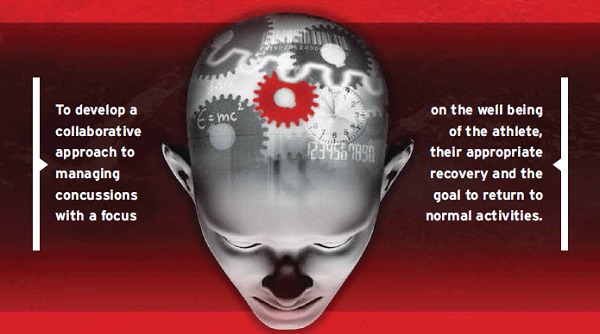
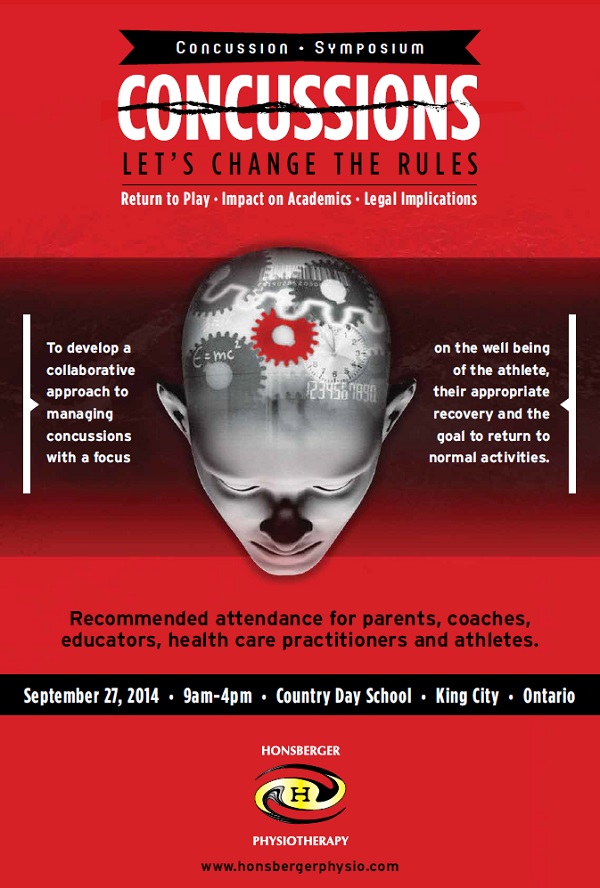
Honsberger Physiotherapy Clinic will be holding a Concussion Symposium for young athletes at King City’s Country Day School on September 27.
With offices in Aurora and Markham, Honsberger has been making an effort to raise awareness of both concussion effects and the preliminary measures an athlete should take.
One such measure is what is known as baseline testing, a pre-season exam used to measure an athlete’s balance, as well as physical and cognitive abilities.
While baseline testing is not a preventative method, it does allow medical professionals, coaches, and parents to better assess an athlete’s concussion symptoms.
Efan Gonsalves, a Certified Athletic Therapist and Registered Physiotherapist at Honsberger, relies on baseline testing for more accurate results.
“The whole idea is to give you a baseline score, which gives you a goal of an objective score,” said Gonsalves. “It gives you a number, rather than relying exclusively on somebody telling you symptom-wise what they are feeling and not feeling.”
According to Gonsalves, forms of baseline testing have been around for close to twenty years. However, in its most raw form it was what Gonsalves called “pen and paper questionnaires”.
“They would be your standard ‘what’s your name’, ‘what day is it’ questions,” said Gonsalves. “It was mostly built on looking at perception and awareness, and how well you can concentrate and focus.”
Gonsalves says the main challenge of these tests were not just the simplicity, but the lack of movement as well.
“They’re not often testing you in motion, in the patterns that you would be doing for your sport. What you want to find out is not only does your brain work, but what happens now when you put it under more physical pressure.”
Since these early days, baseline testing has been computerized for more detailed evaluations.
“So now you’re still asking the same questions, but also doing a lot more reaction time and visual-based tests through computer programs.”
Concussions and their consequences have been a major topic of conversation in the sports world as of late. Most recently, the NCAA agreed to a $70 million settlement with former and current athletes last Wednesday for concussion research and diagnosis.
Gonsalves has worked as a trainer for a number of his son’s minor Aurora Tigers hockey teams for years. He encourages the parents and players to put the athlete through baseline testing during preseasons.
The age limit of hitting in minor hockey was recently increased from PeeWee to Bantam, meaning players don’t body check until they are 14 years old.
As a medical practitioner, Gonsalves can see the positive side of allowing more physical growth before introducing hitting.
“At eleven and twelve years old, there are a lot of things that are changing in the brain. That’s probably when as players they’re the most vulnerable to the damages of concussion injury, for short and long term.”
“It’s such a radical time when the brain is changing from the child side of functioning to the adult side.”
While different athletic governing bodies may have varying methods of concussion testing, Gonsalves says the latest standardized test is the Sport Concussion Assessment Tool 3 (SCAT3). SCAT3 tests an athlete’s physical and mental responses, both for baseline testing and for those post-concussion.
The Concussion Symposium will not only be geared towards athletes, but coaches, parents, and health care providers as well.
“We want everyone on the same page,” said Gonsalves. “So that each group understands the challenges and pitfalls from each side, and can hopefully come up with some better strategies to manage the communication gap.”
The Auroran will be visiting the Honsberger Physiotherapy Clinic next week to get hands-on experience with baseline testing. Look for the results in next week’s edition.
More information on the Symposium can be found at www.honsbergerphysio.com.


Readers Comments (0)
Headline News
Hope House to open Wellness, Grief & Caregiving Hub in community
.

Societal change on full display at Revolution Now exhibit in Aurora
The more Ava Dedier learns about her roots and her culture, the more complete she feels as a person. The Markham-raised artist knew a fair ...
Community Planning Permit system reflects resident, business concerns
Aurora’s Community Planning Permit System, a proposed plan which will help the Town steer future development in the historic downtown core is expected to move ...
SAC Saints aim for a three-peat at the 2026 MacPherson by competing in two hockey tournaments in NH and NY
The St. Andrew’s College Saints will be aiming for a three-peat when they host Aurora’s longest-running and most prestigious hockey tournament from Friday, January 30 ...


